How We Cut Lunch Detentions by 57% and Improved School Culture

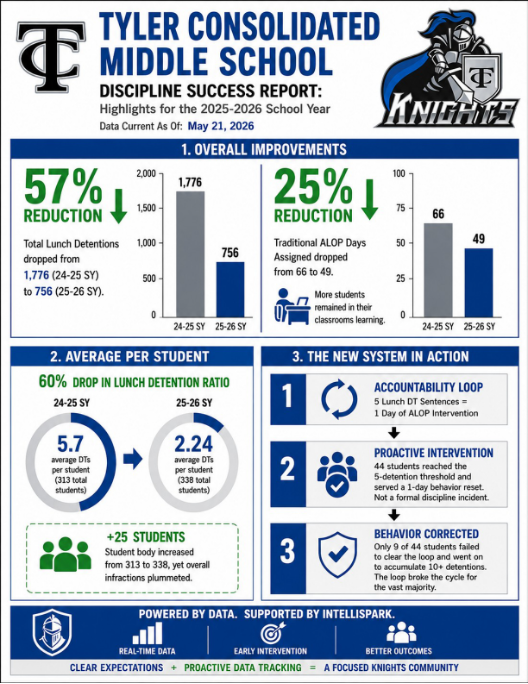
Lunch detentions dropped from 1,776 to 756, a 57% reduction, even as enrollment increased from 313 to 338 students. Alternative Learning Opportunity Program (ALOP) days assigned also dropped from 66 to 49, a 25% reduction. The lunch detention ratio fell from 5.7 to 2.24 average detentions per student.
Middle school behavior can be an adventure every day.
At Tyler Consolidated Middle School, we were not trying to solve a discipline crisis. Our students are respectful, hardworking, and accustomed to the high expectations established throughout Tyler CountySchools. We already had systems in place to help students learn from mistakes and stay focused on success.
Like many schools, we occasionally had students who were not committing major offenses but were repeatedly engaging in lower-level behaviors such as classroom disruptions, tardiness, or social conflicts.
We already had consequences and supports in place, including lunch detention and our Alternative Learning Opportunity Program (ALOP), along with dedicated teachers, support staff, office personnel, and administrators.
As we reviewed our practices, we saw an opportunity to strengthen our tiered system of support for student behavior by focusing lesson isolated incidents and more on emerging patterns.
Our goal was straightforward: identify concerns sooner, communicate with families more consistently, and provide timely intervention before behaviors escalated.
We were not looking for a harsher system. We were looking for a more responsive one.
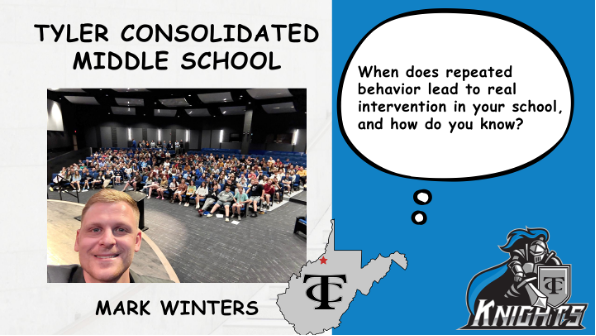
“When does repeated behavior lead to real intervention in your school, and how do you know?”
The Problem: Lunch Detention Was Becoming a Destination, Not an Intervention
Before we changed our process, lunch detention was easy to assign but hard to manage with the level of consistency we wanted. A teacher might send an email. Our lunch detention coordinator would track days owed and days served. We tried spreadsheets and other approaches, but nothing gave us exactly what we needed.
Over time, we saw a pattern. Some students seemed to spend more days in lunch detention than in the actual lunchroom. When that happens, lunch detention is no longer changing behavior. It is just becoming a place students go.
“I’ve noticed we’ve had quite a handful of kids that seem to spend more of their days in lunch detention than the actual lunchroom. So clearly that wasn’t effective. It wasn’t really changing anything.”
The issue was not whether our staff cared or whether students had expectations. The issue was fidelity. We needed a clear, repeatable process that could help us see patterns earlier, notify families consistently, and ensure no student crossed an intervention threshold without an adult response.
The Shift: Build an Accountability Loop Around Lower-Level Behavior
We already had a field trip eligibility policy based on attendance, academics, and behavior. While the behavior component included ALOP assignments, students could accumulate multiple lunch detentions without affecting their eligibility. We saw an opportunity to create a more meaningful and consistent connection between repeated behavior concerns and our existing expectations.
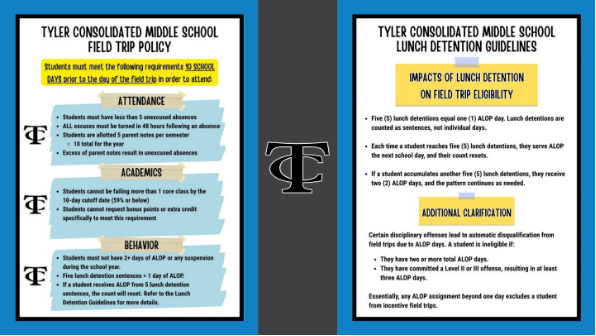
The accountability loop: 5 lunch detention sentences = 1 day of ALOP intervention. Each time a student reached five lunch detentions, the student served ALOP the next school day and the count reset. If the student accumulated another five lunch detentions, they received two ALOP days and the pattern continued as needed.
That one-day ALOP assignment at five lunch detentions was designed as an intervention, not just a punishment. It created a moment to stop the pattern, talk with the student, contact home, reteach expectations, and give the student a chance to reflect and reset before the behavior became more serious.
What Intellispark Automated for Us
The policy mattered, but the automations made the policy work effectively. Without the right software support, this kind of system can become another spreadsheet, another inbox, or another thing that depends on one person remembering every step. Intellispark helped us build the process directly into our behavior rubric so the system could run with consistency in the background.
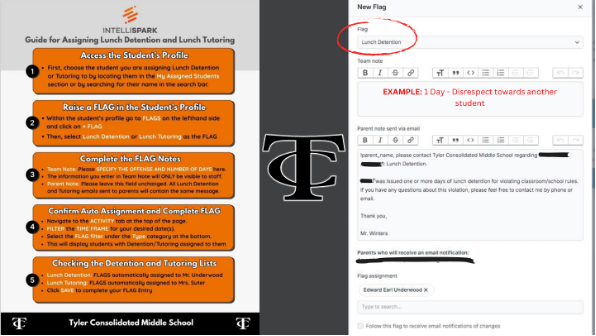
The first automation focused on communication, but relationships remained at the center of the work.
The automated emails and reports helped ensure families were informed, but the real impact came from the conversations that followed. Parents frequently replied to emails or contacted the school with questions, creating opportunities for meaningful communication and stronger partnerships between home and school.
One person who played a particularly important role in the process was our lunch detention coordinator, Mr. Underwood. Because he worked directly with students both in class and during lunch detention, he had opportunities to build relationships, reinforce expectations, and have conversations that extended beyond the consequence itself.
Students were not simply serving a consequence and moving on. They were interacting with adults who knew them, cared about them, and wanted them to succeed.
That commitment extended throughout the building. Teachers documented concerns, office staff facilitated communication with families, administrators monitored patterns and interventions, and parents partnered with us to support their children.
Intellispark helped organize, automate, and strengthen the process by ensuring that communication, documentation, and intervention thresholds were implemented consistently across the building. However, the success of the system ultimately came from people working together toward a common goal: providing students with the support, accountability, and guidance they needed to be successful.
“If we called home for every single middle school behavior, that would be a full-time job. It would be nearly impossible. So this has been a huge help.”
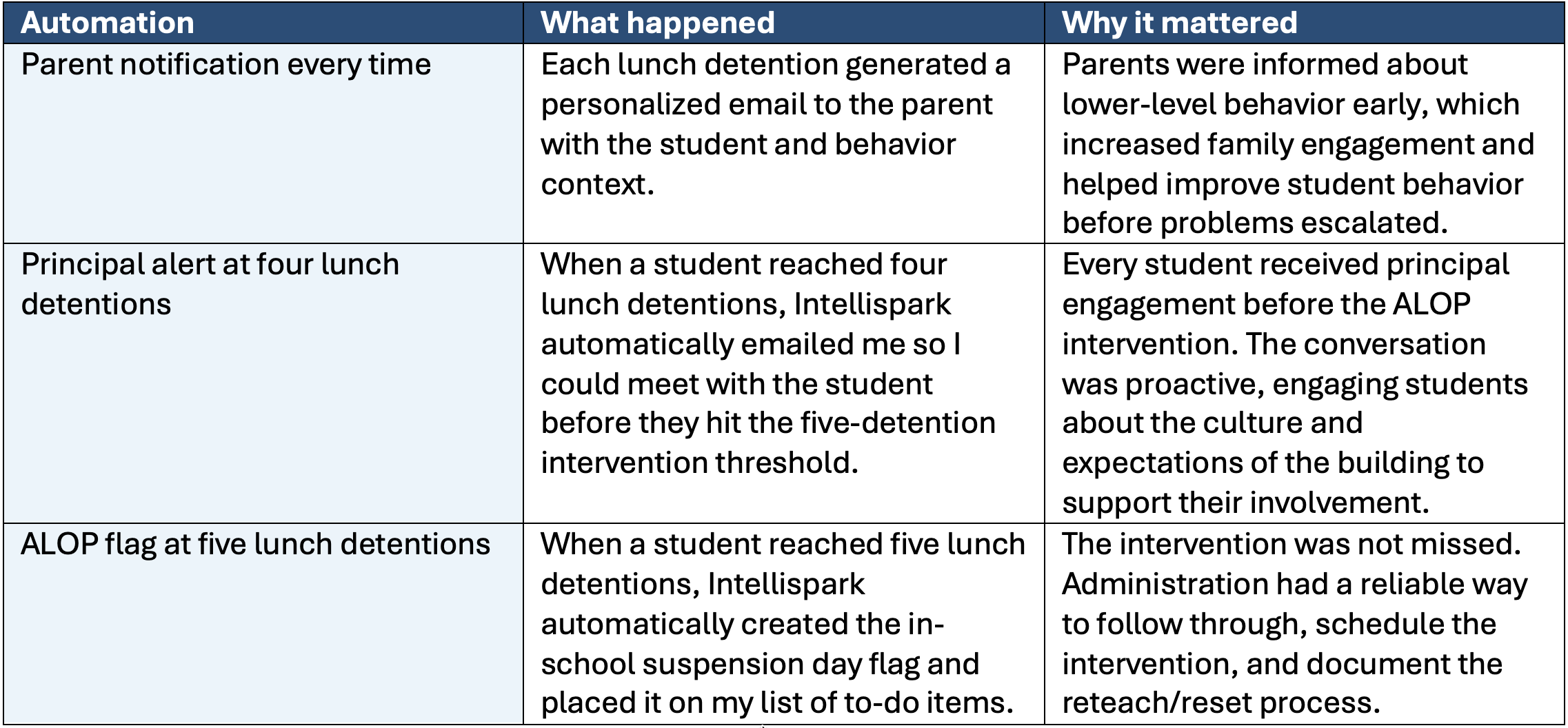
The second automation was the principal alert at four lunch detentions. That alert gave me a chance to pull the student in before they crossed the five-detention threshold. That conversation mattered because it made the system proactive instead of reactive.
The third automation was the ALOP flag at five lunch detentions. Once the student hit the threshold, the intervention was automatically placed on my list. It did not depend on someone remembering to tell me, checking a spreadsheet, or catching it later. The system made sure the response happened.
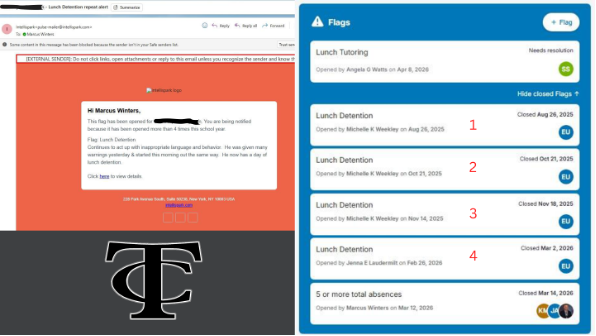
The Intellispark takeaway: Intellispark can help schools build and automate parts of their behavior rubric so expectations are applied with greater fidelity. The result is not just saved administrative time; it is earlier intervention, stronger family engagement, and more consistent follow-through.
The Results: More Students, Fewer Detentions, Fewer ALOP Days
The results were stronger than we expected. We improved significantly even while serving more students this school year.

Even as enrollment increased from 313 to 338 students, lunch detentions dropped from 1,776 to 756. The average number of lunch detentions per student fell from 5.7 to 2.24.
Traditional ALOP assignments also decreased from 66incidents to 49 incidents, a 25% reduction.
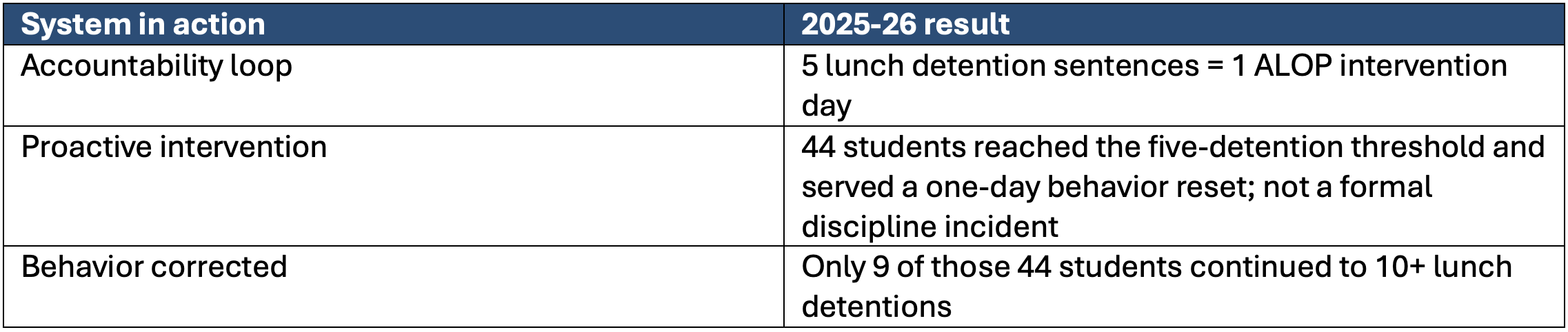
Most importantly, the data showed that earlier intervention was making a difference. During the year, 44 students reached the five-lunch-detention threshold and received a one-day ALOP intervention. Only 9of those students later accumulated 10 or more lunch detentions, suggesting many changed course before additional supports became necessary.
“I knew we’d improve with the updated policy, but not by these numbers, plus having more students on top of last year’s enrollment. We could not have implemented this system and done so successfully without Intellispark.”
How the Culture Changed
The data matters, but the culture shift is what we felt every day. Students understood the expectations. Parents heard about behavior earlier. Teachers had a clear process. Administrators had visibility. And students were not allowed to sit in the same consequence over and over without a real adult response.
When recently asked on a webinar whether this system changed the culture of the building, my answer was simple: “yes”. The students who used to live in lunch detention came a long way. Even when a student reached the five- or ten-detention threshold, the conversation was different. We could talk about progress, patterns, and what needed to change next.
“Although it’s a little bump in the road, we can still look back and call it improvement.”
What Other Schools Can Learn From Our Process
The biggest lesson for us is that behavior systems need more than just consequences. They need clear expectations, timely communication, meaningful interventions, and a consistent process for follow-through. Lunch detention alone was not what changed student behavior. What made the difference was connecting lunch detention to parent communication, administrative involvement, ALOP intervention, student reflection, and ongoing support.
Intellispark allowed us to strengthen the systems we already had in place. We did not have to replace our existing approach, our field trip eligibility policy, or our ALOP process. Instead, we built automations around practices we already believed in. That is where the consistency and efficiency came from.
The system saved time by eliminating much of the manual tracking and monitoring that previously fell on administrators. We were no longer sorting spreadsheets, counting entries, or trying to remember which students were approaching an intervention threshold. More importantly, it improved consistency. Every student was held to the same expectations, and the same threshold triggered the same response every time.
Clear expectations + proactive data tracking = a focused school community
The work at Tyler Consolidated Middle School shows how schools can use behavior data to engage families earlier, save administrators hours of time each week, and make sure interventions happen before lower-level behavior becomes a larger discipline pattern.
Closing Reflection
This was the first year we implemented the full process, and the results were encouraging.
We reduced lunch detentions by more than 1,000, reduced traditional ALOP assignments, and strengthened communication, intervention, and support throughout our building.
At Tyler Consolidated Middle School, our goal is not to eliminate every behavior issue. Our goal is to identify patterns sooner, communicate effectively with families, provide meaningful interventions, and support students before concerns become larger problems.
This process helped us do that more consistently. By combining clear expectations, early intervention, strong family partnerships, dedicated staff, and the organizational support provided through Intellispark, we strengthened our tiered system of support for student behavior and created better opportunities for student success.
Most importantly, we created a process that helps adults respond sooner so students receive the support they need to be successful.

Join the Conversation
Are you interested in innovative practices for improving student success, insights from our members, recent news, and engaging webinars? Check out our resources for the latest updates.